
Hosting Christmas Dinner at a Small Dining Table: How to Fit Everyone In
- 11 Nov, 2026
A small dining table does not have to mean a small Christmas dinner. Most tables can seat one or two more people than you think, as long as you plan the space around the chairs, not just the tabletop. Here is how to work out what your table can really take, and how to stretch it on the day without making anyone miserable.
Start with the numbers that matter
Before you borrow chairs or buy anything, measure. Three figures decide how many people you can feed in comfort:
- Elbow room: allow about 60 cm of table edge per person. That is the comfortable standard. At a squeeze, 50 cm works for a single meal, especially if the guests know each other well. Chairs with arms need more, closer to 65 or 70 cm.
- Space behind the chairs: aim for around 90 cm between the table edge and the wall or the nearest piece of furniture on any side where people need to pull out a chair or walk behind someone. Where nobody has to pass, you can get away with less.
- Legs and base: measure the gap between the table legs, not just the length of the top. Corner legs often stop you fitting a third chair along a side even when the top is long enough.
As a rough guide, a rectangular table of about 120 cm seats four, and one of 140 to 160 cm seats four to six. A round table of 110 to 120 cm in diameter seats four comfortably, and 130 to 150 cm takes four to six.
Why round tables cope better with extra guests
If you are short on space, the shape of the table matters as much as its size. A round table with a central pedestal is the most forgiving option for a crowded Christmas: there are no corners to lose and no legs to straddle, so you can usually slide in one more chair by nudging everyone closer together. Rectangular tables are easier to push against a wall on ordinary days, but every guest you add needs a full place along a side.
If you are thinking of replacing a table that only works for two, look at compact designs with a slim or tapered base that leaves room for knees. A small dining table like the Aruba, with its concrete top on a tapered brass frame, takes up little floor space on an ordinary day and can sit either indoors or outdoors. For larger gatherings, an extendable table is the other route: a leaf that slides out for the holidays and disappears again in January.
Seating tricks that buy you extra places
- Swap chairs for a bench on one side. A bench pushed against the wall seats three people where two chairs would fit, and it needs no space behind it for pulling out. It works best for children and younger guests who can slide in and out.
- Mix in folding chairs. Slim folding chairs take up less room than upholstered dining chairs. Put the comfortable ones at the ends for older guests.
- Use the corners carefully. On a rectangular table without corner legs, a guest at each end gives you two extra places without lengthening the table.
- Add a second surface, not a second table. Butting a desk or a folding table against the end of the dining table often looks makeshift and creates a step in height. A matching tablecloth hides the join, but check the heights first: most dining tables are 75 to 76 cm, and a desk can be a few centimetres off.
- Give the children their own table only if there is room for it. A separate children's table in a cramped room just creates two crowded tables instead of one.
Get the food off the table
The biggest space thief on Christmas Day is not the guests but the dishes. A turkey, a ham, three kinds of potatoes and a gravy boat will swallow half a small table before anyone sits down.
- Serve from the kitchen or a sideboard. Plate the main course in the kitchen, or set the dishes out on a sideboard or worktop and let people help themselves.
- Keep only what gets passed around. Gravy, cranberry sauce, salt and pepper and a jug of water earn their place on the table. Everything else can wait nearby.
- Clear between courses. Take the main course dishes away completely before dessert comes out.
- Use smaller plates for starters. Side plates take far less space than dinner plates for a starter.
Decorate upwards, not outwards
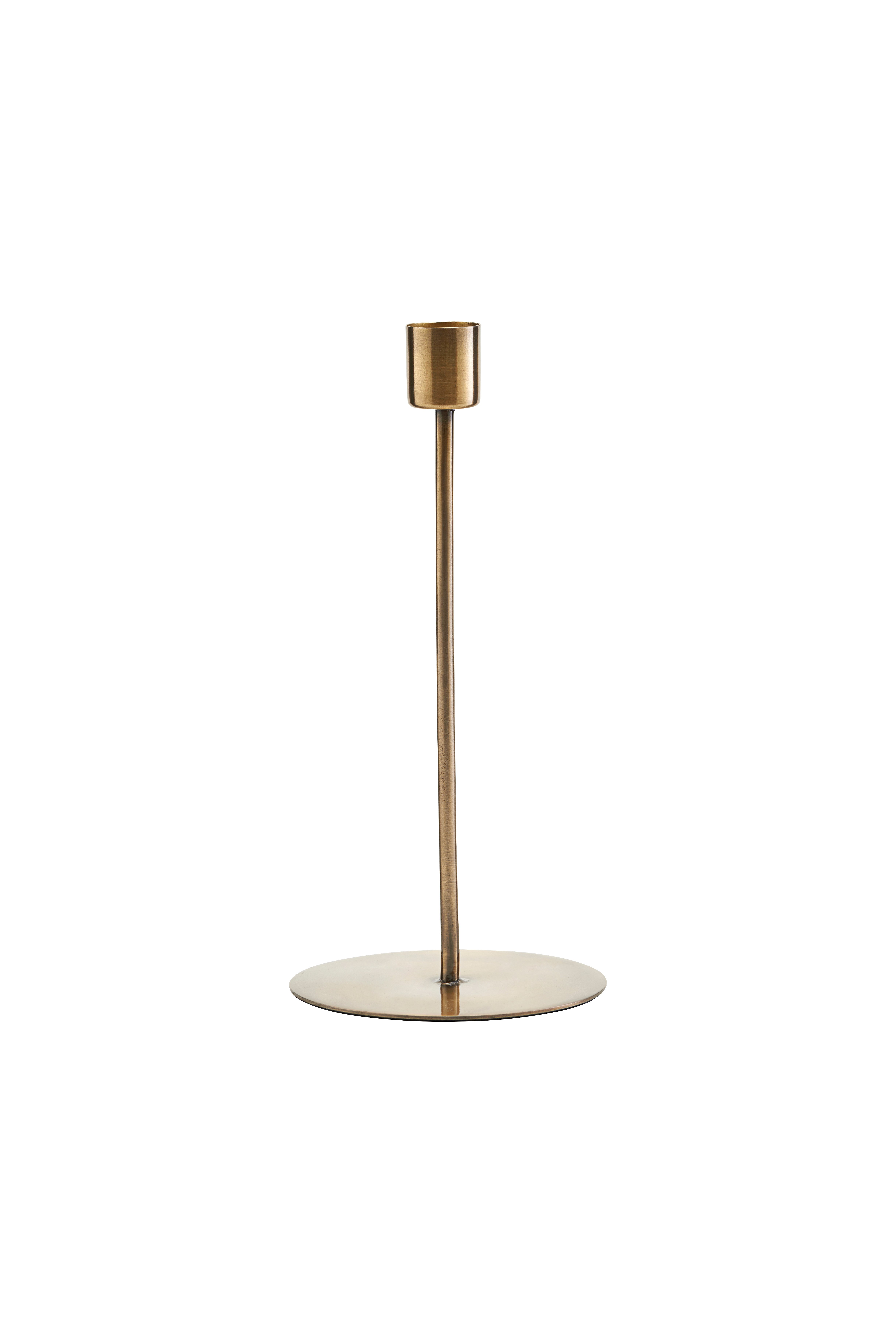
A wide centrepiece is the first thing to go on a small table. Height is cheaper in space than width, so think tall and slim. A single taper candle holder such as the House Doctor Anit with a brass finish takes up the footprint of a saucer while still lighting the table. Two or three of them in a line down the middle, with a sprig of holly or a few clementines between them, look festive without forcing anyone to move a glass. Keep candles away from paper crackers and napkins, and never leave them burning when the table is empty.
If the dining area sits on a rug, check that it is large enough for the chairs to stay on it when pulled out. Our guide on choosing the right rug size covers the measurements for dining rooms.
A quick checklist for the week before
- Measure the table, the gap between the legs and the clearance behind each side
- Count chairs, and borrow or buy folding ones early
- Do a test run: set the table with every chair and plate in place
- Decide where the serving dishes will sit if they are not on the table
- Check that the extra surface matches the table height before the day
- Have a tablecloth large enough to cover any extension
Common questions
How many people can sit at a 120 cm table?
Four in comfort. A round table of that size can take a fifth guest for one meal if everyone shuffles in and the base is a central pedestal. A rectangular one usually cannot, unless the ends are free of legs.
Is a bench comfortable for a long dinner?
A bench against a wall gives people something to lean on, which makes a long meal easier. Without a back to lean on it gets tiring sooner, so give the bench to younger guests and keep the chairs for older guests and anyone with back trouble.
What if guests are staying over too?
Then the dining room is only half the job. Sort out the bed linen, towels and a clear surface for their bags early, and keep the table plan simple so you are not rearranging furniture late on Christmas Eve.
This weekend, lay out every chair you plan to use around the table and sit in each place for a minute. You will know straight away where the pinch points are, and you will still have weeks to fix them.